Let’s Talk About Deworming!
Resistance to our deworming products (anthelmintics) is growing. We only have 3 main classes of anthelmintics for horses. If parasites are to develop resistance to all 3 classes then we will no longer be able to control them.
Parasites develop resistance to anthelmintics by being exposed to them. This occurs through the process of natural selection: those parasites that are not killed by the dewormer (due to a genetic enhancement) live on and reproduce more parasites that are resistant. The previously recommended practice of deworming horses every 8 weeks has led to the development of this resistance on a global level.
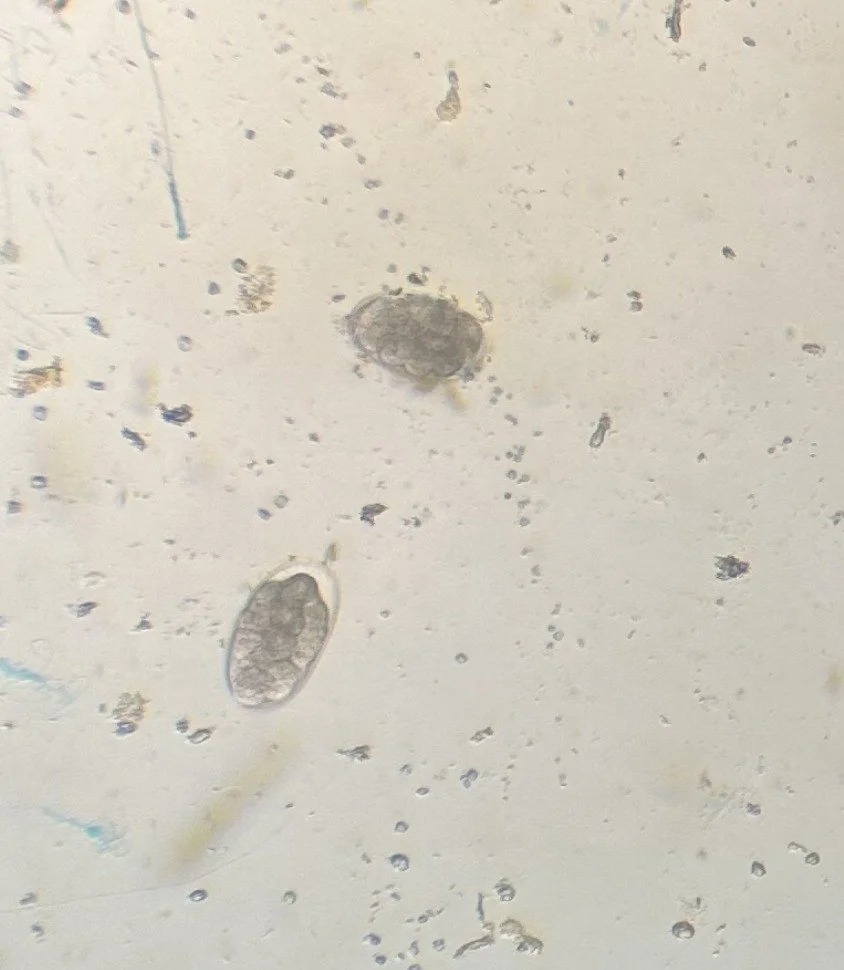
To reduce the development of resistance, we should be performing fecal egg counts:
A sample of fresh manure is sent to the lab to determine how many eggs are being shed by that horse. Horses that shed <200 eggs/gram of feces are considered a “low shedder” and generally require only 1-2 treatments per year.
A horse’s shedding status can change throughout their lifetime and so fecal egg counts should be repeated every spring.
This recommendation will vary depending on your horse’s age and immunity status (foals need much more frequent deworming).
Contrary to popular belief, even when we deworm horses with effective products, we are rarely eliminating every single parasite from their body. Rather, the goal of deworming is to manage the parasite load and allow your horse to remain healthy.
The attached article also talks about important farm management strategies to reduce resistance.
Horse owners and veterinarians alike have a part to play in slowing the development of resistance!